
Salsa
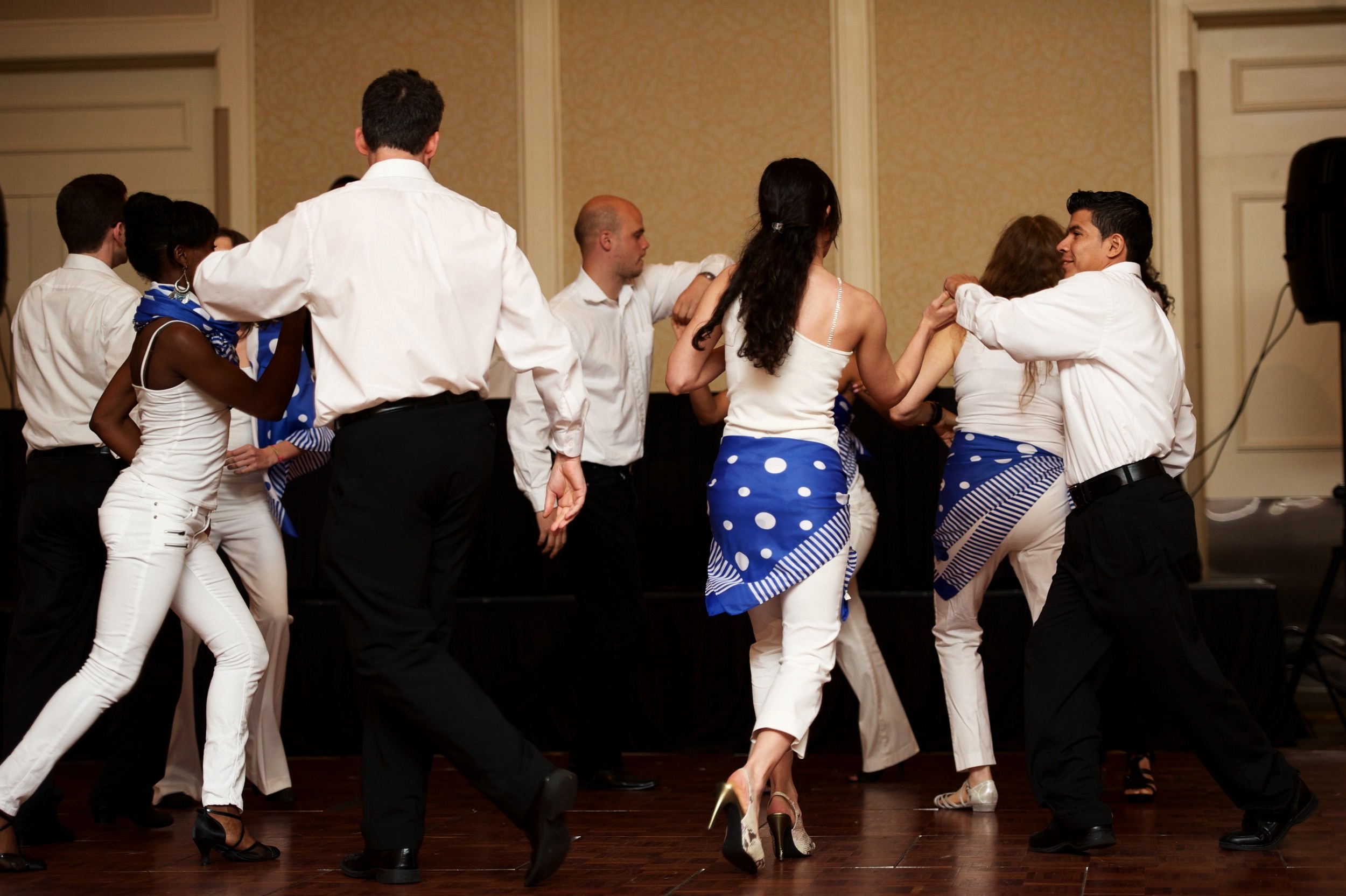
Salsa is one of the most dynamic and important musical phenomena that began in the 1900's. In many communities, it remains the most popular style of dance music today. Salsa represents a mix of Latin musical genres, but its primary component is Cuban dance music. The roots of salsa originated in Eastern Cuba early in the l900s. There, Spanish and Afro-Cuban musical elements were combined in both rhythm and instrumentation.
By mid-century, this music came to Havana, where foreign influences were absorbed, particularly American jazz and popular music heard on the radio. By the end of the l950s, many Cuban and Puerto Rican people, including musicians, had settled in the U.S., especially in New York. This created the environment where Salsa music completed its development. "El Barrio" (Spanish Harlem) was the main place where this occurred. Many bands were formed, and immigrants continued to make Afro-Caribbean music, but they adapted the sound to their new world. They were particularly influenced by American jazz.
Gradually, in the 50s and 60s, Salsa as we know it today was emerging. The most famous musicians of that time were Tito Puente and Celia Cruz. The rise of Salsa music is also closely tied to Fania Records, which was founded in 1964 by the musician Johnny Pacheco and an Italian-American lawyer, Jerry Masucci. The two met at a party in a NY hotel. They struck a deal to launch what became the most influential record label in Latin music's history.
Fania was known as "the Latin Motown," with one huge hit after another becoming popular all over Latin America. Many artists became very famous with the promotion they received from the record label "La Fania." Fania Records remolded Cuban music into a sound more appropriate to Latin New York, and they called the sound "Salsa."
By the 1970s, Salsa was becoming so popular that Fania's bands and artists were touring all over Latin America. This decade was a "heyday" for Salsa. The type of Salsa music that Fania promoted eventually came to be referred to as "Hard Salsa."
In the 80s, a slower and softer style of Salsa was born, with artists like Gilberto Santa Rosa. In addition, around this time, Latin musicians were increasingly making an impact on mainstream U.S. music. Latin music was becoming trendy in the US and beginning to intrigue the rest of the world as well. Both types of Salsa remain popular today, and with the popularity of the music came the popularity of the dance.
Salsa refers both to the music and the dance done to that music. The rhythm for Salsa dancing is quick-quick-slow. To dancers, a "quick" is a step that lasts for one musical beat, and a "slow" lasts for two beats.
For anyone interested in learning some Salsa moves, you can get Barb Bernstein’s Salsa Dancing & Rueda de Casino Guidebook. If you are in the DC region, you can also check out our dance class every Saturday. Or contact Barb@danceintime.com to arrange a class on Zoom for yourself or a group.
Rueda De Casino
During the 1950s, a dance craze called Rueda de Casino became popular in Cuba. The word "Casino" comes from the name of the social club where the dance began. That club was called El Casino Deportivo. "Rueda" means wheel or circle in Spanish. This type of Latin dance is done by a group in a circle, with partners being passed around. It became a wildly popular dance, done everywhere in Cuba---in the streets, in parking lots, in clubs, in homes.
It should be mentioned that some people informally call the dance “Cuban Salsa” since it can be danced to Salsa music and has the same rhythm pattern as Salsa (“quick quick slow”). But many people consider it to be a separate—though similar—dance style. They prefer to call the dance style “Casino dancing.”
Casino can be done by one couple dancing moves themselves. It can also be done with a group of couples doing the same move in unison as described above. In that case, it’s called “Rueda de Casino.” Whatever you call it, the dance is loads of fun.
When a group dances the moves together, someone shouts out the name of a move, and all couples execute the move in synchrony. This creates a feeling of unity and social connection which is powerful, lively, and emotionally charged!! Moves can be called in quick succession, and along with frequent partner exchanges. Dancers love the dynamic and exciting atmosphere that accompanies Rueda de Casino.
A group consciousness develops to make the Rueda work well—with everyone watching the leader for the calls. Dancers have to open up their sphere of awareness far beyond what is necessary for ordinary dancing so they can see what the entire circle is doing. Whether you are dancing or watching, it is thrilling when a Rueda circle works well and flows smoothly!!
This festive dance was brought to Miami by Cuban immigrants and took hold there in the 1970s and 1980s. From Miami, it spread first to major U.S. metropolitan centers with large Hispanic populations and eventually to other cities as well. Rueda de Casino can be done to Salsa music, although many Casino dancers prefer dancing to Timba, a relatively recent style of Cuban music.
In recent years, Rueda de Casino has swept the world. The joyful spirit of this dance has made it popular just about everywhere--from North and South America to Europe, Australia, and beyond. Many dance groups have invented new approaches, new moves, and even elaborate new structures—that reach beyond the circle—in which to do the dance! There has been exciting work done as the dance grows and evolves. Groups of dancers now assemble in classes, clubs, and conventions all over the globe to teach, practice, and perform beautiful Rueda de Casino moves! What began simply in a Cuban social club quickly became a worldwide dance phenomenon!
For those interested in watching or learning Casino or Rueda de Casino moves, you can get Barb Bernstein’s Salsa Dancing & Rueda de Casino Guidebook. If you are in the DC region, you can also check out our dance class every Saturday. Or contact Barb@danceintime.com to arrange a class on Zoom for yourself or a group.